Andrea Perissinotto
President


Muli Bwanji ETS was founded with a clear mission: to support the Muli Bwanji Hospital in Masuku, Malawi, providing medical care and assistance to the local communities that need it most. Our main commitment is to fund the running of the hospital, so that it can provide surgery, obstetric care and daily treatment for hundreds of patients every year. Alongside this core goal, we also support other initiatives that benefit the people of Malawi — from supporting orphanages and school buildings to vocational training and helping disadvantaged people into work — in the belief that health is the foundation on which every other opportunity is built.
We help ensure fair pay for the hospital's doctors and nurses, so that qualified and motivated professionals stay in service.
We cover the day-to-day running costs of the hospital — electricity, water and other essential utilities — so that its services can continue without interruption.
We help buy medicines and vaccines and provide the medical supplies that are essential for patient care. These are often hard to find locally or too expensive for the hospital to afford.
We take care of routine and extraordinary maintenance of the hospital buildings and equipment, to keep them safe and working.
We collect equipment and materials that cannot be bought or found locally and ship them in containers, bridging an important logistics gap.
We invest in medical and diagnostic equipment to improve the quality of care the hospital provides.
We give practical help to the most economically and socially vulnerable families in the local community.
We contribute to the upkeep of the orphanage, giving the children a home, care and daily support.
We cover school fees for vocational training courses, giving young people practical tools for their future.
The Muli Bwanji Hospital stands in the Masuku area, on the Namwera plateau. It is a modular complex: the wards follow one another, linked by covered walkways that join them into a single working whole. It is the healthcare reference point for the whole south-central area of Malawi, as far as the border with Mozambique.
The “Claudio Maternity and Reanimation Center” has 60 beds, a room for childbirth classes, a labor room, 2 delivery rooms equipped for emergency cesarean sections, 4 incubators and 2 newborn care stations. It provides prenatal and postnatal care.
With 3 skilled and experienced surgeons, the hospital can perform many types of operations. There are two equipped operating rooms: a larger one for more complex procedures and a smaller one for simpler, routine operations.
The dental clinic reopened in 2019 with the arrival of a new dentist. This was the chance to renew the equipment with a modern dental chair, complete with all the accessories needed for dental care, and a dental X-ray unit.
The laboratory has blood analyzers for hematology and blood chemistry tests (including HIV, malaria and TB) and urine analyzers. The radiology department has a digital X-ray machine, the only one within a 200 km radius. There is also an ultrasound scanner.
Built with funding from the Embassy of Japan and opened in 2022, the Pediatrics unit has 27 beds. It is dedicated to the diagnosis, treatment and care of young patients, meeting the health needs of children.
The hospital pharmacy supplies doctors and nurses with the medicines, medical supplies and consumables needed by the wards and outpatient clinics. It manages the stock of medicines and medical supplies, so that staff always have what they need to treat patients.
In 1993 Father Lorenzo Pege arrived in Masuku, a small village on the Namwera plateau in southern Malawi, an hour's drive from the nearest town. It was a new mission, in a vast and difficult territory.
From the very first days he faced a reality he could not ignore: hundreds of children, adults and elderly people who fell ill without any chance of treatment. There were no health facilities of any kind in Masuku. Those who tried to reach the nearest hospital – more than 80 km away along African roads – often arrived in a desperate state. Many did not make it.
"How could I preach the Gospel to people who are hungry? How could I sit back, instead of taking a woman in difficult labor to the hospital in Mangochi, which she would never reach without me?"
Father Lorenzo
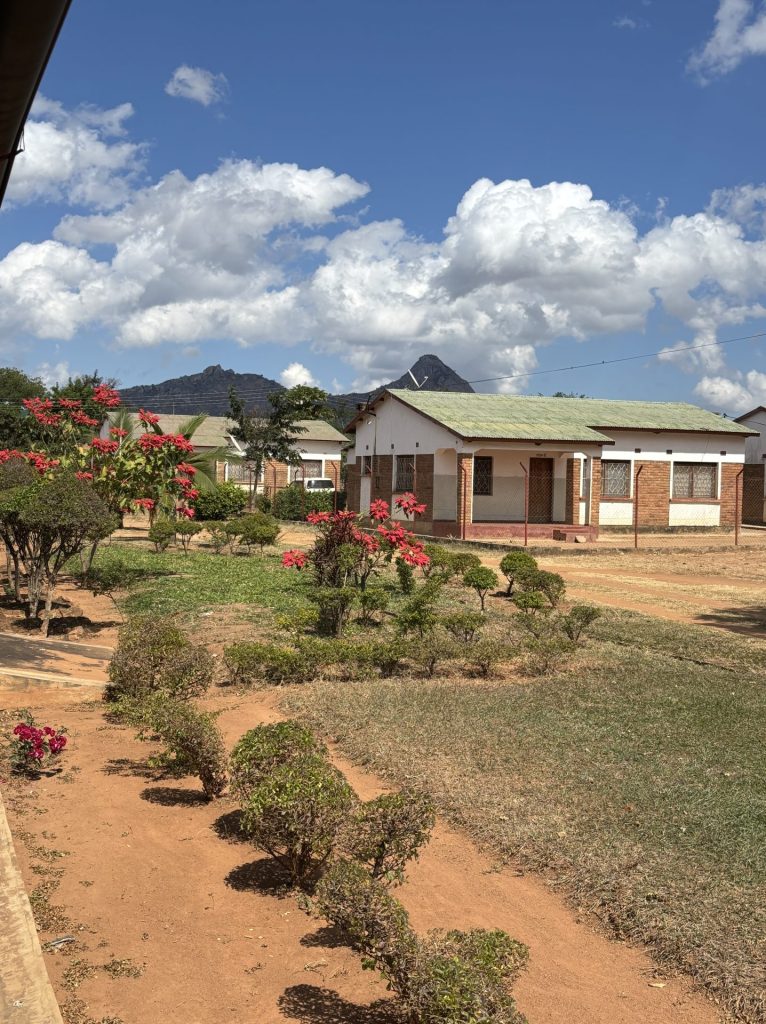
In 2002, at the age of sixty-three, Father Lorenzo began building a small dispensary. Brick by brick, year after year, the dispensary grew: inpatient wards were added, then a delivery room, a laboratory, a pharmacy, radiology and outpatient clinics.
In 2009, with its official inauguration, the Muli Bwanji Hospital had become a true Community Hospital, recognized by the government of Malawi. Father Lorenzo did not stop there: straight away he laid the foundation stone of a new, larger and better-equipped maternity unit. Then housing for the staff. Then the building that would house the nuns called to carry on his work.
"A work that makes me happy, because it allowed me to fulfill the dream of my life."
Father Lorenzo